
Interested in learning a new language? The easiest languages for English speakers to learn are generally those languages that make use of the Roman alphabet and have a structure that somewhat mirrors its.
On the other hand, the most difficult languages to learn for English speakers are those with the most foreign words, tonality, and grammar. If you’re an English native speaker and you’ve managed to become fluent in any of the 10 languages described below, give yourself a pat on the back.
10. Danish
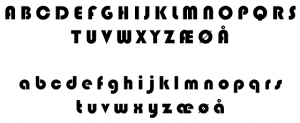
Danish is a North Germanic language that is spoken by approximately 6 million people, mostly in Denmark and in the region of Southern Schleswig in northern Germany. The sound system of Danish is in many ways different than other languages in the world, which makes it one of the hardest languages in the world to learn, as the spoken language usually does not sound anything like its written version. As well, it has a relatively large vowel inventory consisting of 16 phonemes and is distinguished by the many pharyngealized sounds, including both vowels and consonants.
9. Amharic
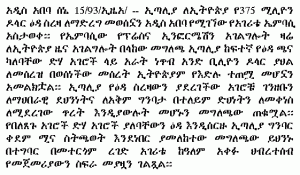
Amharic is a Semitic language spoken in Ethiopia. It is the second-most spoken Semitic language in the world, second only to the Arabic language, and the official working language of the Federal Democratic Republic of Ethiopia.
Why is Amharic so hard to learn? Everyone agree that when it comes to describing the language, it is as extremely hard to crack. Amharic-is-an-extremely-difficult-language. Period.
Foreigners certainly believe so – how many farenjis do you know who can say more than ሰላም ነው (selam no) and/or venture a carved up version of ጠና : ይስጥልኝ (tena ysetelegn)?!*
Ethiopians certainly agree with the assertion – and sometimes rhetorically ask foreigners if ‘Amharic is not a very easy language, ’ certain as they are that they’ll be vehemently told the opposite. It sometimes seems that Ethiopians are comforted in the thought that their language is impenetrable to other people’s attempts to get their mind set on differentiating between a straightforward ተ and an explosive ጠ.
8. Navajo
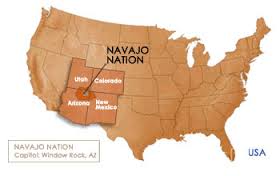
Not that you’re going to try learning Navajo, but if you did, you’ll find it one of the greatest challenges in life. Navajo is so unique that it was used during World War II as the basis for an indestructable code used by the Americans in the Pacific War against the Japanese. By creating a code based on the Navajo language and using trained bilingual Navajo “code-talkers”, the Americans were able to create a code that was not decoded by the Japanese.
Virtually everything in Navajo is done exactly the opposite of the English language. It is a verb-centered language. Even descriptions are given through verbs, and English adjectives have no direct translation in Navajo. Another interesting feature of the language is that it has animacy – a hierarchy of animation determines what verbs a noun will take on.
7. Japanese
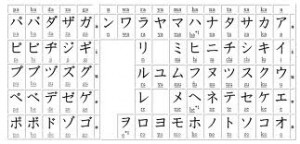
Unlike Mandarin, Japanese is actually extremely easy to say for native English speakers. The simple combinations of vowels and consonants used to make-up Japanese pronunciation is very easy for a native English speaker to grasp.
Unfortunately, written Japanese is much harder than the written Chinese. It incorporates the Kanji pictoral characters from Chinese, and has additional characters that are exclusive to Japanese.

Like Cantonese, Mandarin is a tonal language. This means that a simple change in pitch and/or inflection can completely modify the meaning of that word. To make spoken Mandarin easier for English speakers, Mandarin can be sounded out using “Pinyin”, a transliteration system that uses the Roman Alphabet to learn Mandarin phonetically.
According to the Interagency Language Roundtable, Mandarin is one of the most difficult languages for native English speakers. Mandarin Chinese can take over 2000 hours of classroom instruction, plus an equal number of hours of private study, to achieve native-level proficiency.
As far as grammar goes, Mandarin Chinese is actually much easier than most other languages, since there’s no conjugation and words generally only have one form. However, it also posses unique challenges of its own. For example, Mandarin uses about a dozen adverbs that have no English equivalent.
5. Estonian
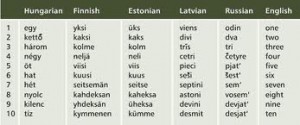
Estonian is a Uralic language. Uralic referx to the Ural Mountains, the homeland of the Uralic people. The languages that have stemmed from the Uralic speech are spoken in all of the areas that are around this mountain range, with the Estonian language being a Baltic Finnic branch of the Uralic languages. The toughness with Estonian is its rigid case system. In case you forgot, a case system is where words inflect depending on their grammatical function in a sentence. And with 14 cases, that’s a lot to remember. The many seemingly arbitrary exceptions to Estonian grammar rules also serve to make this language a challenge for English learners.
4. Hungarian
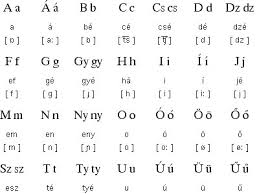
Hungarian is the official language of Hungary and one of the 24 official languages of the European Union. It is yet another extremely hard language to learn because the numerous different verb conjugation students must first make note of, before starting to actually speak the language. The grammar rules are also very difficult, given the fact that the suffixes are the ones that dictate the tense and the possession, instead of the word order how it usually happens with most European languages. In spite of the fact that the Hungarian language has a relatively flexible sentence structure, mastering the language can be hard, especially because of the suffixes and of how they can alter the meaning of words.
3. Basque

In a study done by the British Foreign Office, Basque was nominated for being the hardest language to learn. Geographically surrounded by Romance languages, it is one of the only language isolates of Europe, with no connection to the English language whatsoever. The regional dialects are very different, though a standardized Basque is used in the media and academics.The language is written in the Roman alphabet and pronunciation is pretty simple, even when new consonants sound like tx or tz.
2. Arabic
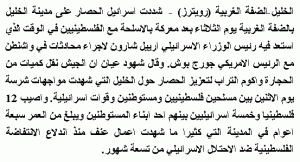
The primary difficulty of the Arabic language is the script. Most of the letters are written in 4 different forms, depending on where they are placed in the word. As well, vowels are not included when writing; just like in the Hebrew language. The sounds are tough, but the words are even harder. An English-speaking student learning a European language will run across many familiar-looking words, but English-speaking Arabic students don’t come close to being so lucky. Arabic is a VSO language, meaning the verb usually comes before the subject and object. It has a dual number, so nouns and verbs must be learned in singular, dual, and plural. A present-tense verb has thirteen forms. There are also three noun cases and two genders. Dialects don’t help either. Arabic spoken in Morocco is quite different from the Arabic spoken in for example Lebanon.
1. Cantonese
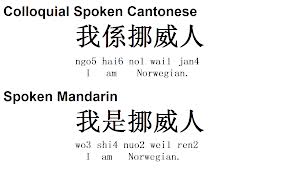
Cantonese is a Chinese dialect that is spoken in the Canton region of China (including Hong Kong). It shares its written form with Mandarin Chinese. However, the way Cantonese is spoken will differ than the way it is written using Hanzi characters.
Speaking of Hanzi characters, written Chinese is not phonetic. If you’re learning a new European language, or even an exotic phonetic language like Korean, you can at least sound out words you’re not familiar with. In Chinese, the writing system is pictoral, meaning that each character represents a different word. The only way to know the meaning of a character is to have it memorized, all 20,000+ characters.
To make things even more difficult, the exact same character will almost always have various purposes, depending on the context it is used. The same sounding word can also have more than one written form, with each written form having a totally opposite connotation.